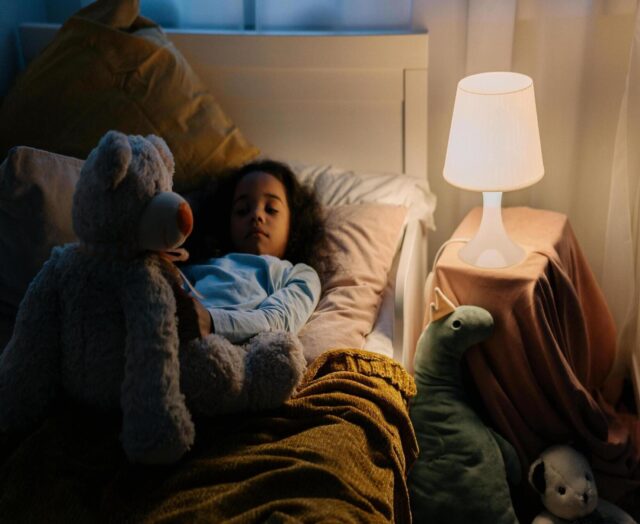
Many parents notice the same pattern: their child seems fine during the day—but once bedtime comes, the coughing and breathing issues start.
This is actually very common in asthma.
Why Asthma Symptoms Often Worsen at Night
Several factors contribute to nighttime symptoms:
1. Natural Changes in the Body
At night, the body’s natural hormone levels change.
This can lead to:
- Increased airway inflammation
- More airway narrowing
👉 Making asthma symptoms more noticeable
2. Lying Flat
When your child lies down:
- Airway mechanics change
- Mucus can shift
This can trigger coughing or breathing discomfort.
3. Allergens in the Bedroom
Common nighttime triggers include:
- Dust mites (mattresses, pillows)
- Pet dander
- Bedding materials
👉 These can worsen symptoms while your child sleeps
4. Cooler Night Air
Cooler air can irritate sensitive airways and trigger symptoms in some children.
5. Poorly Controlled Asthma
Nighttime symptoms are one of the clearest signs asthma is not well controlled.
👉 Well-controlled asthma should NOT wake a child from sleep.
What Should Parents Watch For?
- Coughing after falling asleep
- Waking up due to breathing issues
- Needing inhaler overnight
- Restless or poor-quality sleep
What Can Help?
Depending on the cause, management may include:
- Adjusting daily asthma medications
- Improving inhaler technique
- Addressing allergies (dust mite control, etc.)
- Optimizing sleep environment
When to Be Concerned
You should take a closer look if:
- Nighttime symptoms happen regularly
- Your child needs medication overnight
- Sleep quality is clearly affected
Bottom Line
Asthma symptoms at night are common—but they’re also a signal.
They usually mean asthma needs better control.
👉 If your child has nighttime asthma symptoms, schedule an evaluation at Texas Lung & Sleep.